

Moisture rarely announces itself. A leaking pipe behind a wall, a damp corner in a basement or a slow seep under the floor can run for months before anyone notices a stain. By then, the problem may have spread to timber, plaster, insulation and indoor air. The good news is that most hidden moisture leaves clues. Knowing what to look for lets you act early, when fixes are usually simpler and cheaper.
Table of Contents
- Condensation that keeps coming back on windows
- A persistent musty or earthy smell
- Peeling paint, bubbling plaster or flaking wallpaper
- Stains and water lines on ceilings and walls
- Green, black or fuzzy growth on surfaces
- A damp, cold basement or crawl space
- Soft, warped or squeaky floors
- A quick walk-through checklist
1. Condensation That Keeps Coming Back on Windows
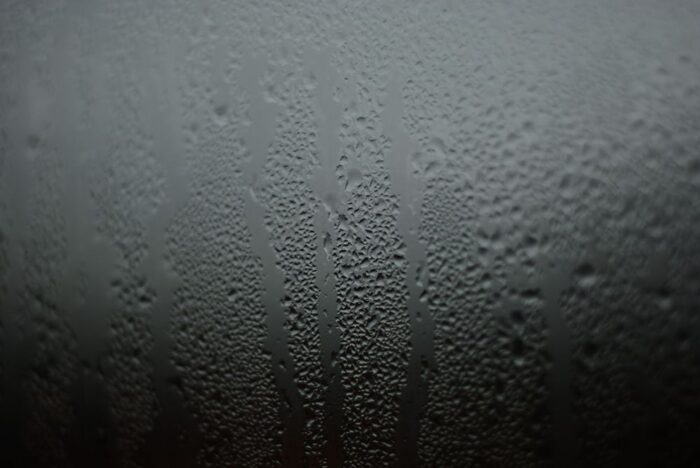
A little condensation on a cold morning is normal. Condensation that returns every day, runs down the glass or collects on the frames is a different story. It usually means indoor humidity is higher than the building can handle, and that moisture is looking for a cold surface to settle on.
Watch for these related signs:
- Water pooling on window sills or soaking into the timber trim
- Dark spots or black specks in the corners of window frames
- Fogging that appears on the inside of double glazing
- Wet patches on the wall directly below a window
The US Environmental Protection Agency recommends keeping indoor relative humidity below 60 percent, and ideally between 30 and 50 percent. A basic hygrometer, available at most hardware stores, will tell you where your home sits. For more detail on how humidity, ventilation and building design interact, the EPA’s guide to mold, moisture and your home is a practical starting point.
2. A Persistent Musty or Earthy Smell
Many homeowners describe the first sign of trouble as a smell they can’t place. It is often strongest in a particular room, inside a cupboard or near the floor. Musty odours tend to come from microbial growth that is feeding on damp material you cannot see. Common culprits include:
- The backs of plasterboard, paneling or wallpaper
- Carpet underlay that has been wet and never fully dried
- Wall cavities around leaking or sweating pipes
- Poorly ventilated wardrobes against external walls
If the smell returns after cleaning, the source is still wet. Finding it is the priority, because cleaning the surface alone will not fix it.
3. Peeling Paint, Bubbling Plaster or Flaking Wallpaper
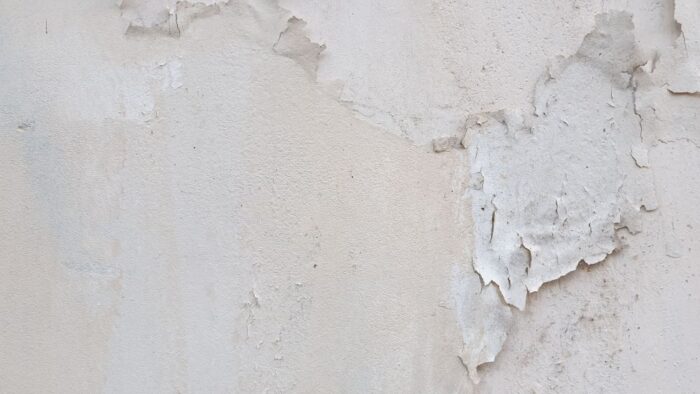
Paint is designed to sit on a dry surface. When moisture pushes up from behind, the bond between paint and wall breaks down. Bubbling, blistering and flaking are classic symptoms, and they often appear in a band along the lower part of a wall or in a patch that never seems to dry out.
Repainting over these areas is a common mistake. The new coat will usually fail within a season because the underlying moisture has not been addressed. Scrape back the affected area, identify the source and let the wall dry fully before repainting.
4. Stains and Water Lines on Ceilings and Walls
Brown rings, yellow patches or faint tide-mark lines are strong evidence that water has passed through a surface at some point. The stain may be dry now, but that does not mean the problem is over. Check whether the mark grows after rain, after showers or after a dishwasher or washing machine runs. A stain that reappears after rain points to the roof or external walls. A stain that appears after using a bathroom points to plumbing or ventilation.
5. Green, Black or Fuzzy Growth on Surfaces
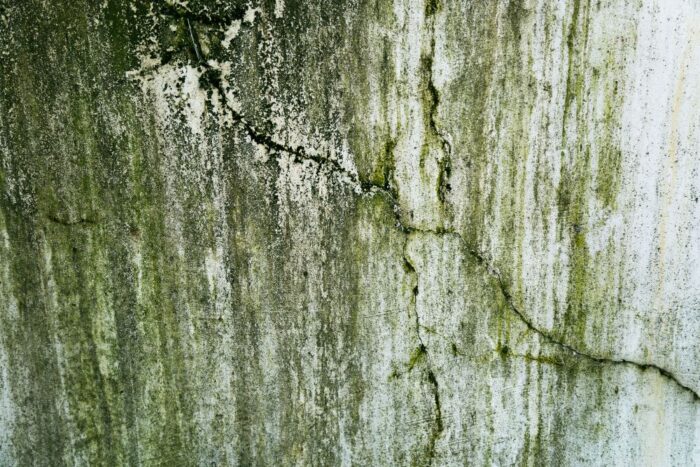
Visible growth on walls, grout or ceilings is one of the clearest signs of persistent dampness. Green or grey patches on exterior-facing walls often reflect rain penetration or water rising from the ground. Black spots in bathrooms and kitchens usually point to condensation and poor ventilation.
Growth on a wall is not always a sign of an emergency, but it should never be wiped off and ignored. Remove it with a suitable cleaner, dry the surface thoroughly and then trace the moisture source. If the wall stays damp, a rising damp assessment may be needed.
6. A Damp, Cold Basement or Crawl Space
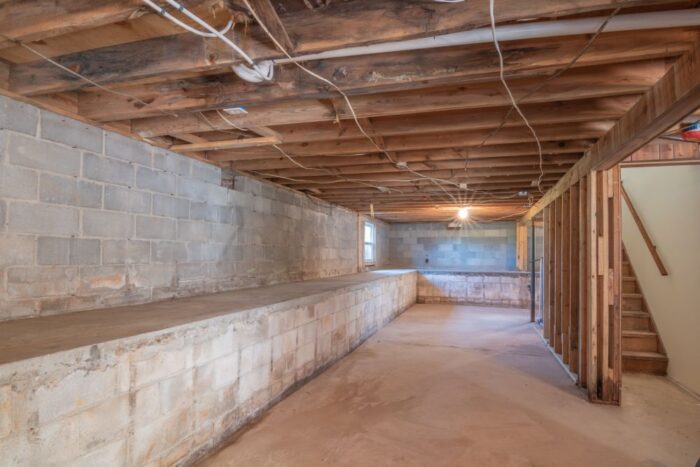
Below-ground spaces are especially prone to hidden moisture because they sit against soil that holds water. Signs to look for include:
- A cool, clammy feel to the air, even in summer
- Efflorescence, which is a white, powdery residue on concrete or brick
- Puddling after heavy rain or a sump pump that runs frequently
- Bare soil in a crawl space with no vapour barrier
Water can rise into masonry through capillary action, and this is often called rising damp. In older homes built without a damp-proof course, the problem can be more pronounced. Where water is clearly moving up from the ground, a qualified specialist can test wall moisture and recommend a remedy. Homeowners searching for rising damp treatment Sydney’s inner west will find assessments that cover this type of test, though a trained inspector can also advise you on the right approach for any region.
7. Soft, Warped or Squeaky Floors
Timber responds to moisture by swelling, cupping and losing strength. If floorboards feel spongy underfoot, lift at the edges, or have started to pull away from their neighbours, water may have reached the subfloor or joists. Squeaks can also appear when boards move against nails that have loosened as the wood absorbs and releases moisture. Check the underside of the floor if you can access it, and look for darkened timber, mould or a musty smell in the void.
A Quick Walk-Through Checklist

A structured inspection makes hidden moisture easier to spot. Work through each room with a torch, a hygrometer and a notepad. Check cupboards, behind furniture, under sinks and along skirting boards, since these areas are easy to overlook. The NC State Extension mold and moisture checklist covers many of the same points room by room and is useful for building a routine.
The table below summarises the seven signs, where they are most likely to appear and a simple check you can do yourself.
When to Bring in a Professional
Some checks are safe to do yourself, but others call for expert help. Consider a professional if:
- The damp area is larger than a metre or keeps returning
- You suspect mould behind finishes or inside wall cavities
- Floors are noticeably soft or structural timber may be affected
- You cannot identify the source after a thorough inspection
A good assessment will identify the cause, not just the symptom. That distinction matters, because treating the stain without fixing the leak or drainage problem usually leads to the same damage again.
Keeping Moisture Under Control Year-Round
Hidden moisture is easier to manage when you make small habits part of your routine. Run exhaust fans during showers and cooking, dry laundry outdoors when possible, keep gutters clear and make sure the ground slopes away from the foundation. Check the warning signs in this guide once or twice a year, especially before winter, when condensation tends to peak. Acting on the first faint clue is almost always less disruptive than waiting for a visible failure.